

Indicator Definition
| Indicator Name | WFC 1.11 Number of households (people) who are either moderate or severe food insecure (measured by Food insecurity Experience Scale (FIES)) |
|---|---|
| Indicator Definition | This indicator measures the proportion of households experiencing moderate or severe food insecurity, as defined by the Food Insecurity Experience Scale (FIES). Moderate food insecurity means households are uncertain about their ability to access enough food, while severe food insecurity indicates they have reduced food consumption or experienced hunger. 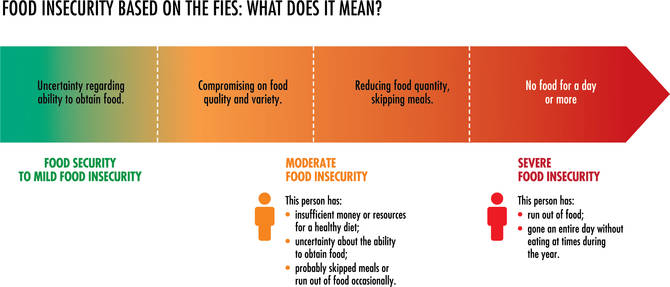
|
| Indicator Level | Outcome |
Disaggregation
| Disaggregation |
|
|---|---|
| Measuring Unit | Individuals answer the survey on behalf of their household. The survey is conducted with a sample of the target population, this can for instance be a community (e.g. community-based agriculture initiatives), a geographic area (e.g. catchment area for campaigns), or specific households that participate in project activities (e.g. training) (primary stakeholders). |
Kobo Questionnaires
The column "food_insecure_status" gives you the final classification for each surveyed person/HH
Examples of Actvities
Implementing food aid or cash transfer programs.
Supporting community-based agriculture initiatives to improve local food production.
Conducting training programs for sustainable farming practices aimed at increasing food availability.
Promoting nutrition education and dietary diversity campaigns.
Facilitating access to food markets or establishing local food distribution systems.
Data Collection
| Measuring Frecuency | At least Baseline and Endline. |
|---|---|
| Data Collection Guidance | At minimum, the project should include the following: Midline Surveys (if feasible): To strengthen monitoring and make informed adjustments during the project, consider conducting additional surveys (midline or annually). These additional data points allow for early identification of challenges and ensure timely corrective actions to keep the project on track. In most cases, use the 12-month reference period (assuming there is more than 12 months between baseline and midline/endline), however, if the survey is being applied to identify risk factors and consequences of food insecurity rather than for population monitoring, for instance in humanitarian settings, a 30-day reference period is preferred. The survey should be conducted using face-to-face interviews or computer-assisted personal interviews (CAPI) to ensure accuracy and comprehension of the FIES questions. For areas where in-person surveys are not feasible, mobile phone or online surveys can be used. If not all targeted household can be included in the survey, use stratified random sampling should be used to ensure representation of different socio-economic and geographic groups. |
| Common Challenges | Challenge: Incomplete survey coverage in hard-to-reach areas. Solution: Use mobile or online surveys and partner with local organizations for broader data collection. |
How to report
The scale is already predefined in the questionnaire so results across projects will be comparable.
Report the combined proportion of the population experiencing moderate or severe food insecurity.
Reporting is done in the years a follow-up survey has been conducted (endline, midline, or annual outcome monitoring).
Compare baseline and follow-up (mid-line or endline) results to identify the extent of food insecurity in targeted households and assess whether project interventions are reducing the proportion of households experiencing moderate or severe food insecurity. If the follow-up survey is conducted before the project ends and the proportion of households remains high, adapt project strategies to better address the underlying causes of food shortages or poor access. Responses to the questions must always be analysed together as a scale, not as separate items.
These proportions then can be extrapolated to the full project population and reported together with the baseline distribution of age, gender, and “left-behind” groups. (This baseline profile requires capturing household composition in the baseline survey in any case.) When presenting results, always report absolute numbers of people. You may measure change as a percentage of households (e.g., “% of households who changed”), but you should report the findings as numbers of people, alongside the baseline demographic breakdown.
Results can also be analysed at the program level to identify which strategies are more or less successful, with lessons learned used to adjust ongoing projects. The data can also help target the most vulnerable households for additional support by identifying those experiencing persistently high levels of food insecurity.
Related Indicators
| Related Donor Indicators | SDC: FAO SDG 2.1.2 Prevalence of moderate or severe food insecurity in the population, based on the Food Insecurity Experience Scale (FIES)
|
|---|---|
| Related HELVETAS Indicators | |